Identify the exact combination
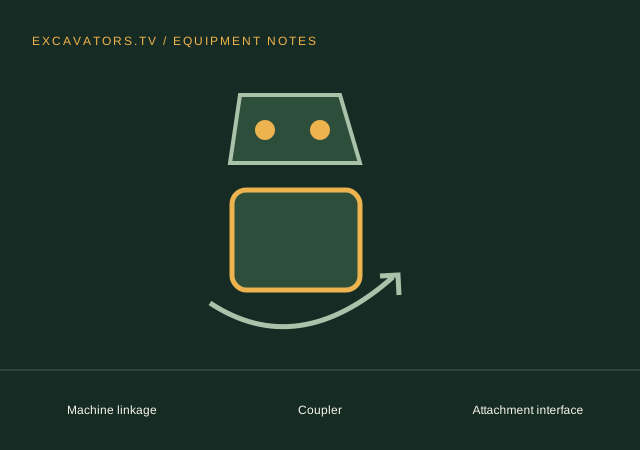
Collect the carrier make, model, serial number and configuration, then identify the attachment and coupler. Ask the supplier to confirm compatibility for the complete combination in writing. Similar-looking mounting points are not a complete assessment.
Powered tools need more than physical fit
For a powered attachment, request confirmation of the hydraulic and control requirements from the supplier and manufacturer documentation. Clarify which hoses, connections or setup work are included. Do not substitute a generic flow or pressure assumption for the specified machine and tool combination.
Check the task as well as the connection
Explain the material and intended work. Ask how attachment mass, reach and working clearance affect the selected configuration. A tool that connects to a carrier may still be unsuitable for the planned application.
Compare the complete delivered package
List the attachment, mounting hardware, hoses, installation, operator familiarisation, service information and warranty separately. Check availability and lead time directly. Clarify who resolves a mismatch and whether a return is possible before ordering.
Keep the documentation with the equipment
Record the confirmed combination and supplied instructions alongside service records. When the tool moves to a different carrier, repeat the compatibility check rather than treating a previous installation as approval for every machine.
Manufacturer background
Caterpillar — attachment selection ↗