
Maintenance
Identify the machine and configuration
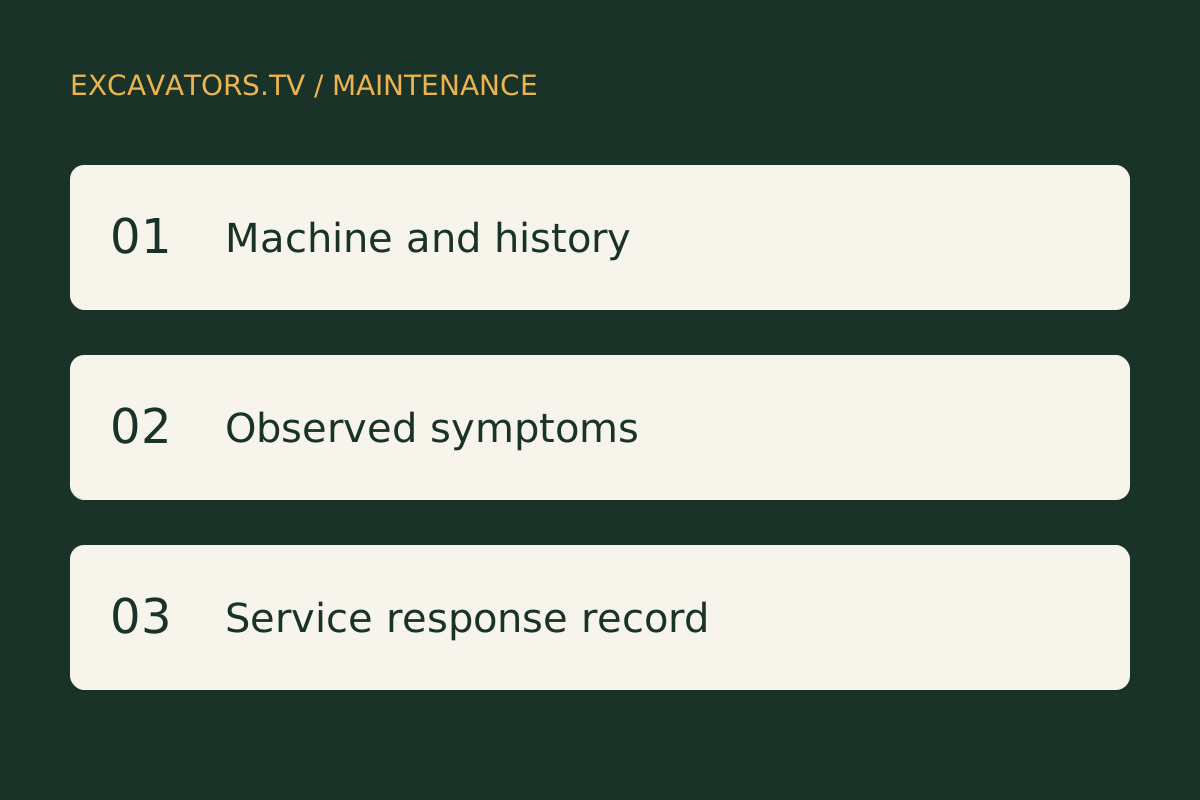
Begin with the make, model, serial number, hours and fitted attachment. Include the correct owner or rental contact and the machine’s location. A service team needs the exact configuration to select the relevant information; a general description such as “small excavator” leaves important questions unanswered.
Describe what you observed
Record what the machine was doing when the issue appeared, whether it repeated and any displayed warning or code exactly as shown. Distinguish observations from guesses. “A warning appeared during loading” is more useful than naming a failed pump without an assessment.
Collect existing records
Provide recent service history, repairs and changes to attachments or configuration. Share relevant photographs or a video only when they can be obtained safely without operating a faulty machine for demonstration. Follow the equipment instructions and service team’s directions; this is an enquiry checklist, not a diagnostic or repair procedure.
Explain the site arrangements
Tell the service provider about access, contact availability and whether the machine is hired. Ask what must be arranged before a technician attends and who is authorised to approve work. Do not promise a lifting, recovery or repair method before the responsible specialists assess it.
Close the communication loop
Keep the service report, identified issue, work authorised and supplied recommendations with the machine record. Ask for clarification when the report distinguishes an immediate repair from later attention. A better record helps the next service conversation and avoids relying on somebody’s memory of a previous visit.