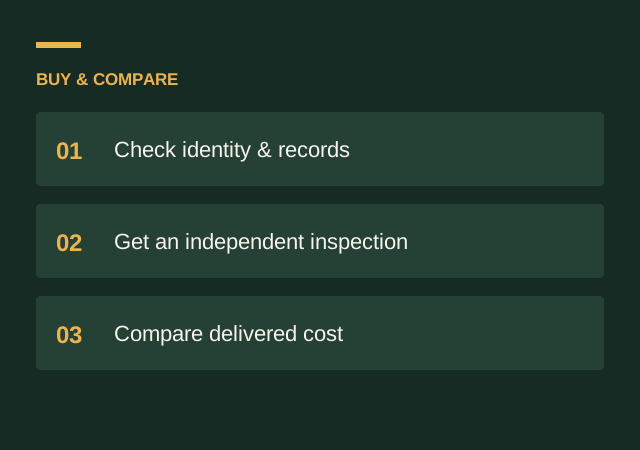
Confirm exactly what is being sold
Request the model, serial number, year, recorded hours, attachment list and clear current photographs. Establish who owns the machine and who is authorised to sell it. Ask what records support the seller’s account of service, repairs and previous use; a meter reading is only one part of the condition assessment.
Arrange an independent inspection
Use a qualified inspector familiar with the machine class. Agree access and the scope of the assessment before travelling or making a commitment. Ask for findings on the structure, undercarriage, pins and bushings, hydraulics, controls and recorded faults. A seller’s video can support the discussion but does not replace an inspection.
Check the complete configuration
Confirm the boom and arm, counterweight, track or tyre specification, coupler and supplied attachments. Ask whether installed grade-control hardware, software access and transferable support are included. A similarly named machine may be configured differently from the one you need.
Compare the delivered cost
Put the asking price beside inspection, transport, taxes, immediate repairs and missing attachments. Check the collection deadline, storage charges and any auction or buyer fees. Separate verified condition from the budget you are setting aside for uncertainty.
Where to start looking
Manufacturer-linked used-equipment channels and established dealers provide starting points for enquiries. Compare individual listings and their terms; inclusion in a channel is not a guarantee that a particular machine fits your job. Excavators.tv does not currently hold stock or verify live for-sale inventory.
Useful reference
Komatsu — equipment, used and rental pathways ↗
Reviewed · Excavators.tv editorial desk