Start with the surface and the work
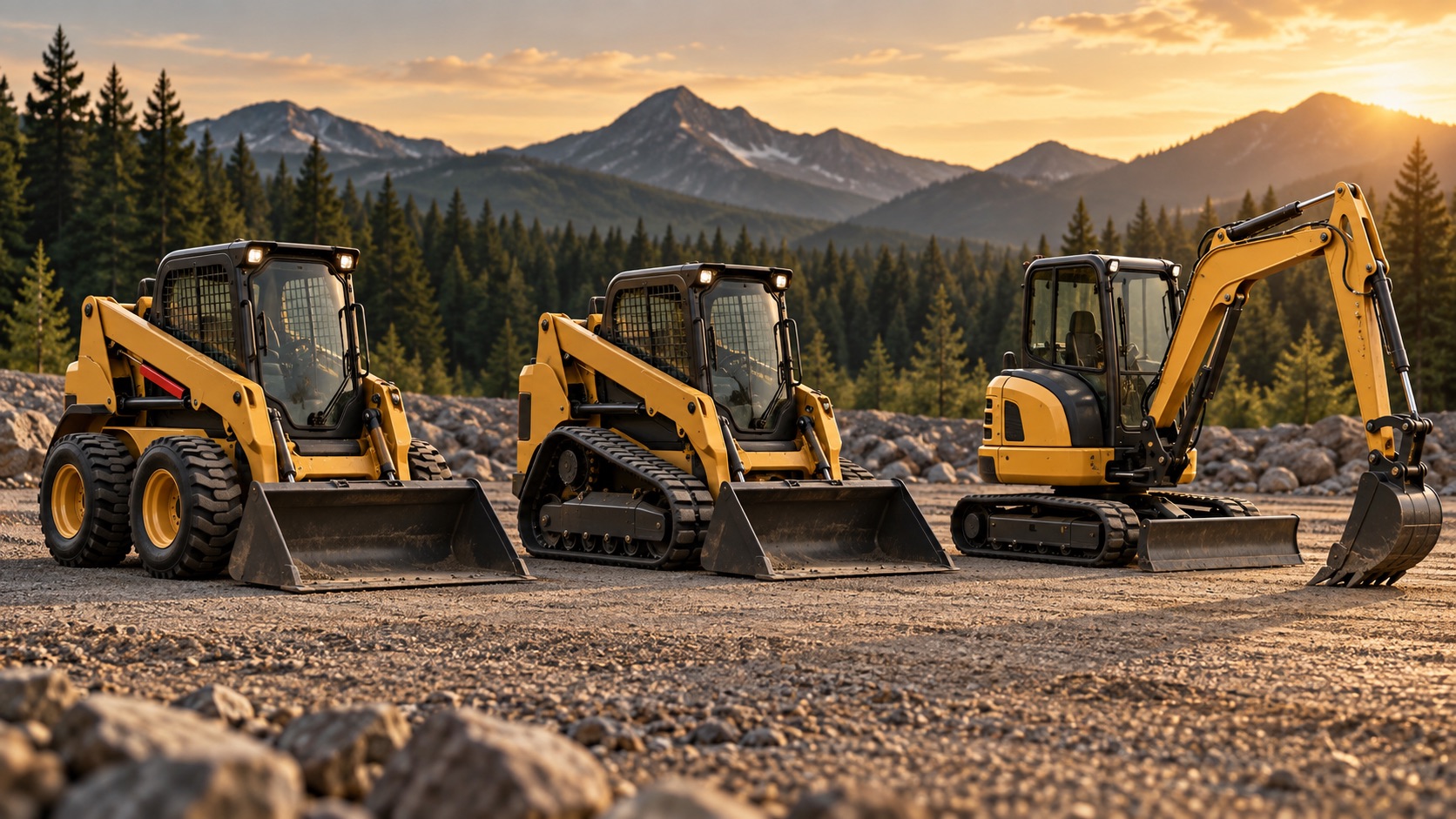
A skid steer uses wheels; a compact track loader uses a tracked undercarriage. Manufacturers describe different strengths across surfaces and applications, but there is no universal winner. Describe the ground, travel distance, loading task and finished surface before asking for a recommendation.
What a useful comparison includes
Give both suppliers the same brief: access dimensions, material, attachment tasks, loading height and operating time. Ask for the exact machine and attachment configuration, not simply a wheeled or tracked category. Confirm what is included in the supplier’s stated dimensions and capacities.
Protect the finished site
Neither machine type guarantees that a lawn, driveway or finished surface will remain undamaged. Discuss protection, turning space and reinstatement as part of the job scope. If weather or ground conditions change, agree who decides whether the equipment plan must change.
Compare support and downtime
Include tyres or tracks, undercarriage condition, inspection history, service availability and transport in an ownership or rental comparison. Request current prices and lead times directly. A cheaper base rate can become a more expensive job if the supplied configuration cannot perform the agreed work.
Ask these questions before booking
Which surfaces and access measurements informed the recommendation? Which attachments are included? What condition is recorded at handover? Who covers transport, cleaning and downtime? Put the answers beside the machine specification when comparing proposals.
Manufacturer background
Bobcat — choosing wheels or tracks ↗