
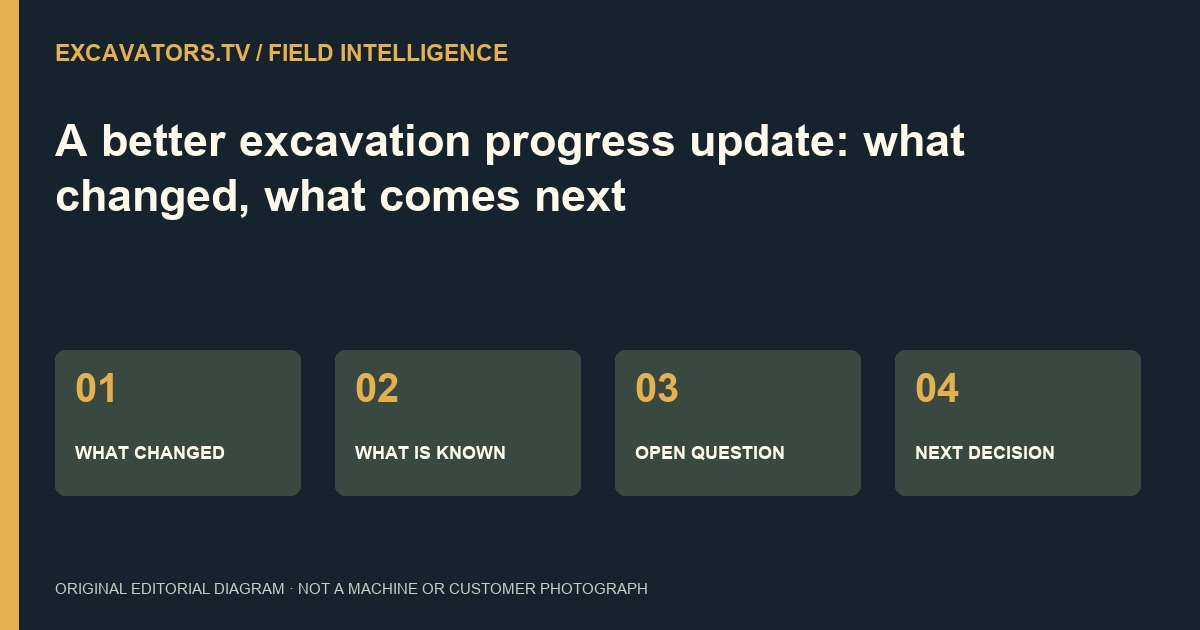
Make the update useful to its reader
A customer progress note has a different job from a finished project story. The reader needs to understand the current position and any decision that needs attention. Start with the date, the relevant part of the work and the person preparing the update. Describe a real observed change rather than writing a general statement that the project is progressing well.
Separate completed work from expected work
Use distinct headings for completed, in progress and awaiting confirmation. A planned delivery or an intended next task should not appear in the completed column. If you do not yet have a confirmed date, record the dependency and the person checking it. This is a proposed communication method, not a report of work on a particular customer site.
Give photographs a clear purpose
Use photographs the business is authorised to share and label what each view shows. A wide view can explain location while a closer view can support a specific observation. Avoid including unrelated people, private documents or access information. Do not treat a progress photograph as proof of compliance, an engineering assessment or approval of hidden work.
Name the decision without inventing authority
If the team needs an answer, write the question and identify who is authorised to decide it under the actual project arrangements. Make the required information easy to find. A message requesting a decision should not imply that the recipient has already accepted a change in scope, price or responsibility.
Keep the current version easy to identify
Agree where the active update lives and how a replacement is announced. A dated title and one current link are easier to interpret than several attachments labelled final. Where someone must acknowledge an instruction, use the project’s agreed process rather than assuming a read receipt or an edited document establishes agreement.
Close the loop at the next update
Begin the following note by checking the open questions from the previous one. Record what was confirmed, what changed and what still needs attention. That gives the reader continuity without rewriting the whole history. Keep the underlying records through the business’s ordinary project process; this article does not establish a legal retention requirement.
From the IAM perspective
Clear updates make the working relationship easier to understand. They also create better source material for a later approved project story, because the business can explain its actual scope and decisions. Neither a tidy update nor a polished marketing page proves a result on its own. Keep claims tied to the work and permissions you can substantiate.
Original practical editorial guidance. No customer interview, equipment test or professional approval is implied.