
Marketing
Choose the question the project answers
Start with a specific challenge: limited access, keeping a business entrance open or coordinating spoil collection. A story about one clear decision is more useful than a gallery labelled “another great job.” Explain what the customer needed and what your crew was engaged to do.
Collect the record while it is available
With permission, keep photographs showing the starting condition, relevant work stages and the finished scope. Add short notes on the date, task and reason each image matters. Retain the original files. Remove private details, vehicle information or identifiable people where permission does not cover publication.
Separate your role from the whole project
Identify the work your business performed and acknowledge other contributors when appropriate. If your scope ended at excavation and material removal, do not imply responsibility for a structure built later. Explain any change to the brief and how it was agreed, without disclosing confidential customer information.
Write a decision-led sequence
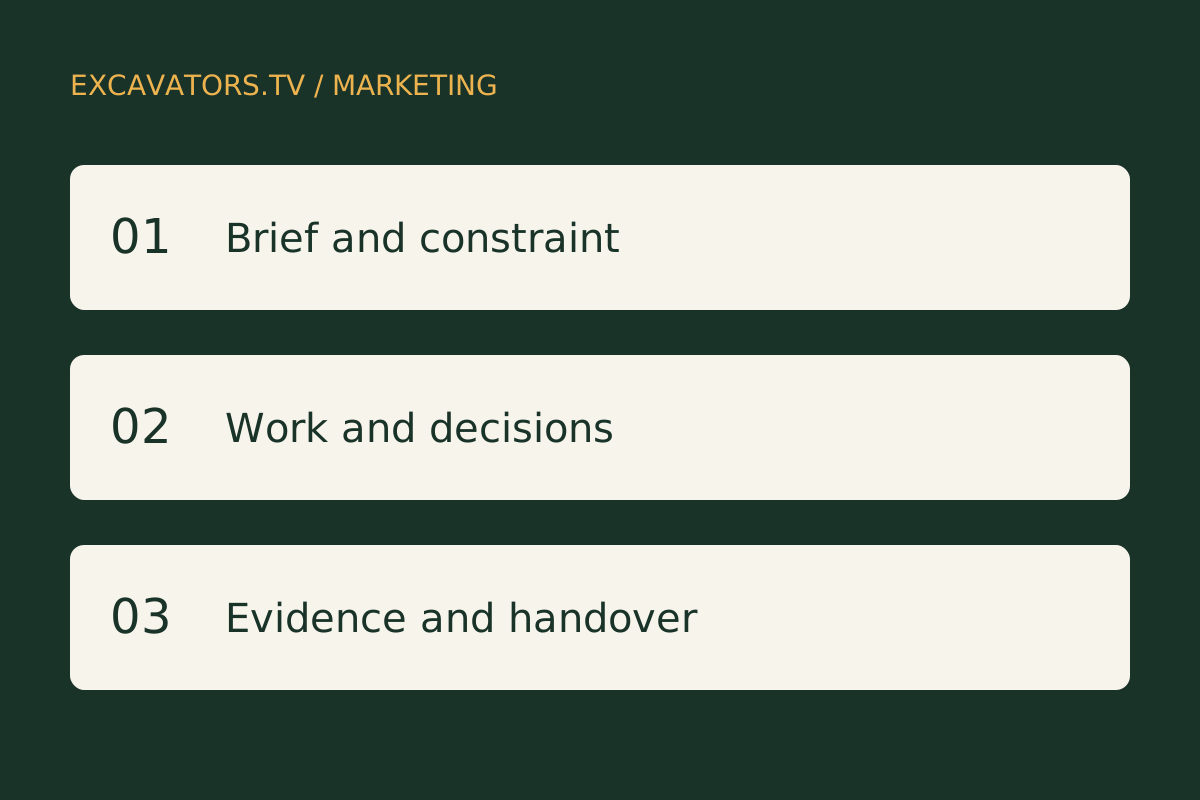
Use four sections: the brief, the constraint, the chosen approach and the handover. For each, include a concrete detail you can substantiate. Avoid inventing time savings or cost percentages. If no measured comparison exists, describe the decision and result without attaching a performance claim.
Give readers a relevant next step
Link to the matching service guide and explain what a similar customer should prepare before contacting you. Ask the customer to review identifying details and permissions before publication. This is a suggested documentation process, not a claim that Excavators.tv has completed the example projects.